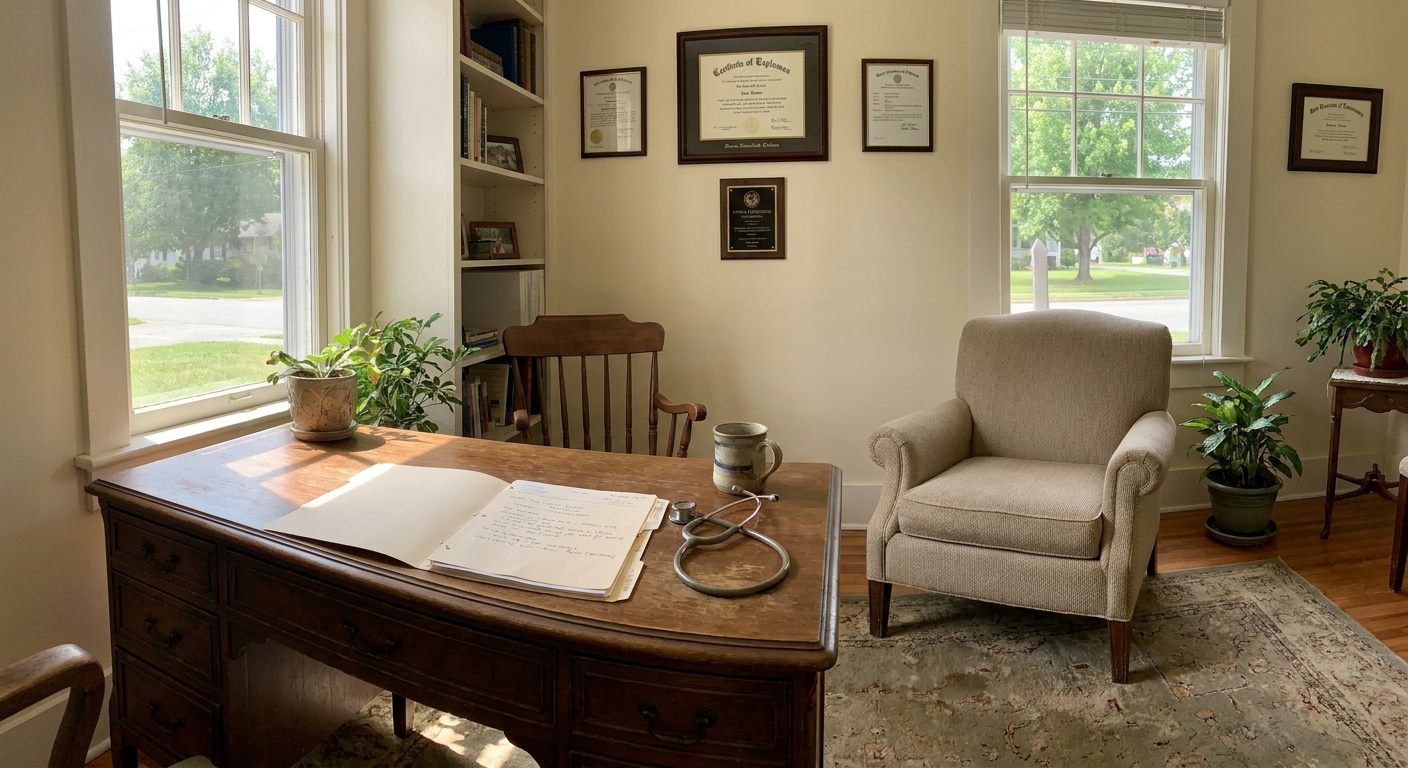

Expertise provided by Dr. Russell, David N Russell MD
Most outpatient programs in Salisbury hand you buprenorphine and then send you to a separate psychiatrist if you have anxiety or PTSD. That means two appointments, two waits, and two copays, so people stop showing up. That is the problem we set out to address. At Carolina Energetics, outpatient addiction treatment in Salisbury NC means one provider works with your opioid dependency and your mental health in the same visit. Opioid dependency rarely shows up alone, and no one should have to handle withdrawal and trauma across separate appointments.
If you have been turned away, judged, or told your case was too complicated, keep reading. This is written for you.
What Does Outpatient Addiction Treatment Mean at Carolina Energetics?
Outpatient treatment here is not just a buprenorphine prescription. It is same-visit integrated care, where the provider who prescribes your medication also addresses the mental health conditions that can accompany opioid dependency, all in one appointment.
That distinction matters more than it sounds. Plenty of clinics will start you on medication and then treat you like a refill. If you mention that you cannot sleep, that the nightmares are back, or that the panic hits every morning, they point you toward another office across town. So you carry two problems that influence each other, and you are asked to address them in two separate rooms on two separate days.
We do not work that way. Opioid dependency and mental health conditions can influence each other. Trying to stabilize one while not addressing the other is one reason some people find it harder to stay engaged. So when you come to Carolina Energetics, the same provider who writes your buprenorphine also looks at the anxiety, the depression, and the trauma underneath. Love is freely given, but trust is earned, and we know you have heard promises before. The way we work to earn it is by addressing the whole person in one place.
What Happens at Your First Visit?
Your first visit can happen the same day you call, and it includes a physical exam, a history, and medication if it is clinically appropriate. There is no waiting list and no referral out to another clinic just to get started.
Here is the part people do not expect. The North Carolina Medical Board requires at least one in-person visit for a physical and history exam before any telemedicine visits can happen. We follow that rule closely, and we schedule that intake right away instead of putting you weeks out. When you are in active withdrawal, a three-week wait is not a scheduling detail, it can be a barrier to getting care.
The first few minutes of that visit are not about paperwork. They are about listening. Just listen. We want to hear what actually brought you in, what you have already tried, and what you are concerned about. Your medication and your dose are individualized based on your prior use, your current use, any current medical issues, and your past medical history. There is no single answer for the exact first dose, because there is no single patient. You are treated with compassion and without judgment, from the first phone call forward.
How Does Buprenorphine Induction Work When You Are on Fentanyl?
Buprenorphine induction for someone on fentanyl is done carefully, using COWS-guided timing and small 2mg dose steps, with transition medications as needed when clinically appropriate. Dr. Russell has worked with patients transitioning from fentanyl onto buprenorphine when other providers in Salisbury would not accept them at all.
The Clinical Opiate Withdrawal Scale, or COWS, is the tool that guides the timing. Depending on your fentanyl use, we wait until a COWS score of 20 to 25 is present, which may show up as nausea, body aches, diarrhea, sniffling, and sneezing. Starting buprenorphine too early, while fentanyl is still in your system, can trigger sharp withdrawal, so timing is important. Once you reach that window, we begin titrating buprenorphine in 2mg doses and build up to your treatment dose based on your individual response.
Consider one patient’s experience. A patient came in using his own prescribed fentanyl patches. He could not find care anywhere else. His dose was high, his case was complicated, and every door had closed. Dr. Russell worked with him to transition from those prescribed narcotics onto buprenorphine when no one else would. Three years later, that patient reports thinking more clearly, with a more stable family and social life. It is darkest right before dawn, and for some people, an honest induction plan can be an important turning point, though each person’s path and outcome will be different.
Can You Address Opioid Dependency and Mental Health at the Same Time?
Yes. The same provider works with both in one visit. Dr. Russell and Dr. Guinn address Acute PTSD, Chronic PTSD, Bipolar Types 1 and 2, Depression, and General Anxiety Disorder right alongside opioid dependency.
The method is a stabilize-then-layer approach. In the first two to three weeks, the focus is working toward stability with buprenorphine induction. Once you have ground under you, we layer in what the mental health side may need. We try meditation, CBT, Brainspotting, and hypnosis first, then consider psychiatric medication if it is still needed. Every intake runs through a structured screening protocol, so underlying issues and behavioral issues that can complicate engagement do not get missed.
This is not us being thorough for its own sake. When co-occurring conditions are present, integrated approaches can help some patients stay engaged, a point supported by federal treatment guidance from SAMHSA. When trauma goes unaddressed, the medication may be working uphill. When both are managed together, by the same person, some patients find it easier to move forward.
Who Provides Your Care?
Your care comes from two providers with the credentials to manage medication for both opioid dependency and psychiatric conditions in a single appointment. That dual capability is what makes same-visit integrated care possible here.
Dr. Guinn is a board certified Nurse Practitioner with a doctorate, double board certified as a Psychiatric Nurse Practitioner. That psychiatric training is what allows the mental health side of your care to be addressed with depth.
Dr. Russell is a licensed Medical Doctor with more than 40 years of experience in General Medicine and Emergency Medicine. He is Board Certified with the American Board of Urgent Care Medicine. He holds BA degrees in Psychology and Zoology from UNC-Chapel Hill and a Medical Degree from the UNC-CH School of Medicine. He is a full member of the American Society of Clinical Hypnosis and holds a degree in Medical Acupuncture from the American Academy of Medical Acupuncture. He has been licensed to practice medicine since 1981. That breadth (medicine plus psychology plus hypnosis plus acupuncture) is what allows one provider to speak frankly to a patient about both the medication and the mind, and to address both in the same room.
What Does Outpatient Care Look Like Week to Week?
Outpatient care here runs at OP-level intensity with MAT, not IOP or PHP. That means you come in for scheduled visits and manage your daily life in between, which may fit people who are medically stable and do not require detox.
Visit frequency is individualized. Early on, when your dose is being adjusted and your mental health is being addressed, you may come in more often. As things stabilize, visits can space out. Your job, your family, and your responsibilities stay part of your life instead of being put on hold. For many people, that is the difference between accepting help and refusing it, because disappearing for thirty days is not what their life can absorb.
One honest point: this level of care is built for people who are medically stable. If a different level of care fits your needs better, we will tell you plainly and help you understand the right pathway. We would rather be straight with you than take you into the wrong level of care. You can learn more about the range of substance use services available across the state through NC DHHS.
Access to Outpatient Addiction Treatment in Salisbury NC: Self-Pay and No Waiting List
Carolina Energetics is located right in Salisbury and offers self-pay options, so you do not have to drive to Charlotte or Greensboro to find outpatient addiction treatment in Salisbury NC that may be willing to work with your case.
The access gap here is real. Salisbury has few providers willing to prescribe buprenorphine to patients on high-dose fentanyl or to people with co-occurring psychiatric conditions. So people get sent an hour away, or they simply go without treatment. For someone in Rowan County who has already been turned away once, that extra distance can be a barrier to trying again.
Widening the door matters most for the people who need it most. Same-day appointments may be available, with no waiting list, so the moment you are ready can be the moment care begins. Nobody here treats you like a transaction. You are a patient, treated with compassionate and non-judgmental care and a personalized treatment plan built around your actual life.
Frequently Asked Questions
Can I start buprenorphine the same day I call?
It may be possible if you are medically appropriate and the intake appointment can be scheduled that day. The first visit includes an in-person physical and history exam, and medication is started when it is clinically appropriate for you.
Do I need a separate psychiatrist if I have PTSD or depression?
No. The same provider who prescribes your buprenorphine also addresses psychiatric medications for PTSD, bipolar disorder, depression, and anxiety in one visit.
Will Carolina Energetics work with me if I am on fentanyl?
Dr. Russell has worked with patients transitioning from prescribed and non-prescribed fentanyl to buprenorphine using COWS-guided timing when other Salisbury providers would not accept them.
What are my payment options?
Carolina Energetics offers self-pay options. Call the office and the team will walk you through what applies to your situation before you begin.
Is outpatient treatment the same as detox?
No. Outpatient treatment here is MAT and OP-level care for people who are medically stable.
How often do I have to come in for appointments?
Visit frequency is individualized based on your stability and clinical needs. You attend scheduled appointments and manage your daily life between visits.
Call Carolina Energetics today to schedule your intake appointment in Salisbury, NC, or visit the website to learn more about integrated outpatient care for opioid dependency and mental health. If you have been turned away for being too complicated, this practice may be willing to work with you.
Start Your Recovery With Support That Meets You Where You Are
If you’ve been weighing whether outpatient treatment can truly address both opioid dependency and the underlying struggles that come with it, Carolina Energetics in Salisbury, NC offers integrated care designed around your life and schedule. You don’t have to have everything figured out before reaching out. A conversation with our team can help you understand your options and what same-visit care might look like for you.
Outcomes vary by individual. The patient experience described reflects one person’s response to treatment and is not typical or expected for others. Recovery is different for each person, and no one’s results can be predicted.