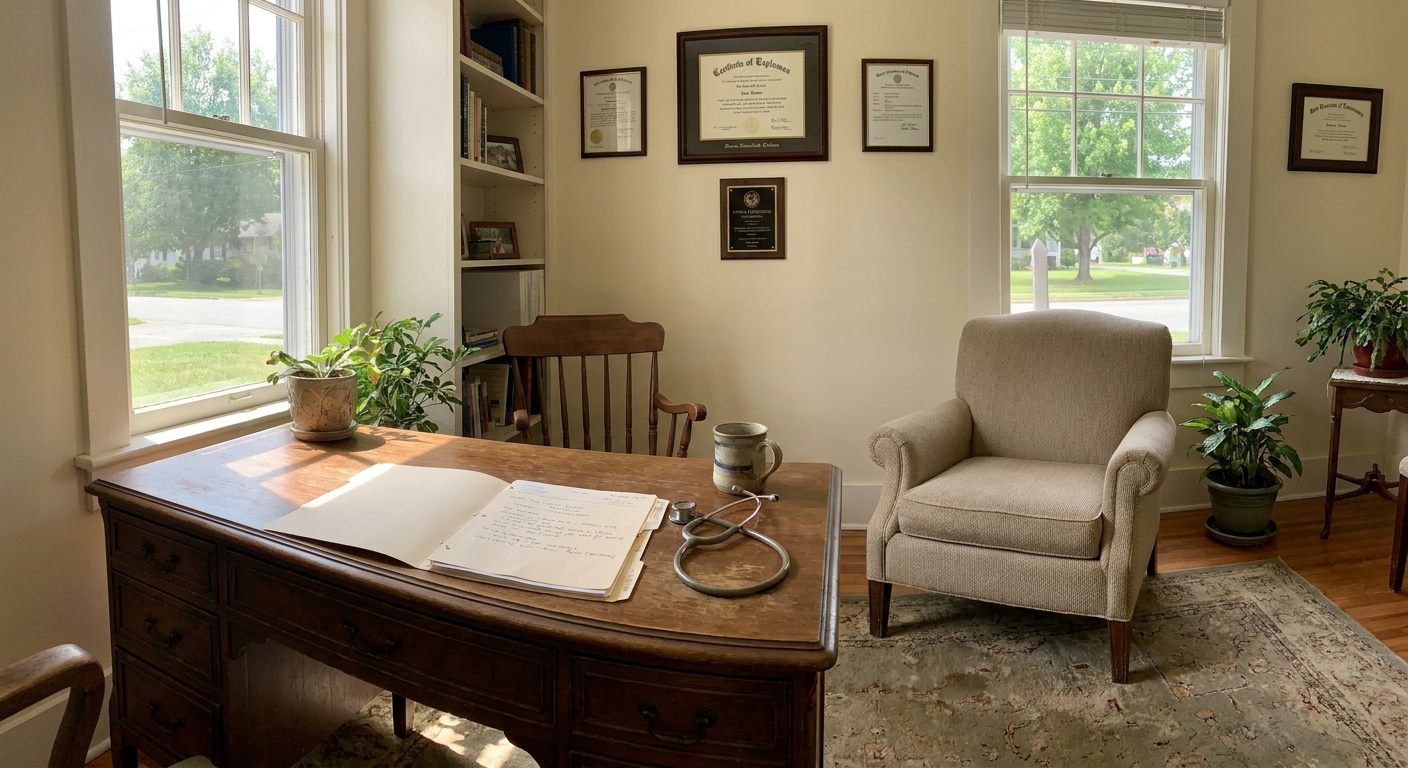

Expertise provided by Dr. Russell, David N Russell MD
Dr. Russell of Carolina Energetics treated a patient who had been on prescribed fentanyl for years and could not find a single Salisbury provider willing to help them taper off. Every other clinic turned them away because the dose was too high, the case too complicated, or the insurance situation too messy. What happened next was not a 12-week residential program or a hospital stay. It was a careful four-day taper followed by a transition to buprenorphine, managed entirely on an outpatient basis, where the patient came to the office, went home the same day, and adjusted the plan week by week. That is what outpatient opioid treatment can look like when it is built around your situation instead of a protocol written for someone else. If you have been searching for outpatient opioid treatment in Salisbury, NC and keep hitting doors that close on you, this is written for you.
What Does Outpatient Opioid Treatment in Salisbury, NC Actually Mean?
Outpatient opioid treatment is structured medical care for opioid dependency that you attend while living at home, instead of checking into a hospital or a residential facility. You come to the office, you are evaluated, you get a medication and a plan, and you sleep in your own bed that night. Your life keeps running. You keep your job, your family, and your routine.
At Carolina Energetics, the clinician prescribes buprenorphine and sets the dose around your real life, not a calendar. That means looking at your home environment, the medications or drugs you are currently using, your employment status, and your withdrawal levels measured with the Clinical Opiate Withdrawal Scale, known as COWS. Two people can walk in the same morning with the same drug and leave with two different plans, because their lives are different. Buprenorphine is the main medication used for opioid dependency here, and research summarized by the National Institutes of Health supports medication as a core part of treating opioid use disorder as the medical condition it is.
What this means for you is simple. You are not handed a generic timeline and sent off. You are treated like a human being whose situation is one of a kind. Just listen to what actually happens in that first visit, because it is the opposite of being processed through a line.
How Does Same-Day Treatment Work at Carolina Energetics?
You can call Carolina Energetics in the morning with active opioid dependency and be seen that same afternoon, with a treatment plan in place before you leave. There is no waiting list, no weeks-long intake, and no requirement to be in crisis before anyone will look at you.
Here is how the first visit works at Carolina Energetics. You arrive and the clinician evaluates your individual situation: what medicines and drugs you are on right now, where you live, whether you have reliable transportation, what you can realistically afford, and how severe your withdrawal is on the COWS scale. Your job status and your current environment matter too, because they shape whether outpatient care is safe and whether you can keep coming back. When it is clinically appropriate, medication may be started that same day. You leave with a prescription, a dose that fits where you are, and a plan for the next visit.
The reason this matters is that timing is everything when someone finally reaches for help. The window when a person is ready can close fast, and making you wait two weeks for an intake appointment is how people slip back. Same-day access is both a practical thing and a clinical thing. On the first visit, and every visit, treating you as a cash cow is the furthest thing from Dr. Russell’s mind. The point is to get you stable and keep you alive, and that starts the day you call.
The Schedule Flexes Around Your Life, Not the Other Way Around
Your follow-up schedule at Carolina Energetics is not a fixed calendar you have to bend your life around. It responds to how you are actually doing, what side effects or cravings you report, and what is happening at work and at home that week. Some weeks you come in more often, and as you stabilize, you come in less.
At each visit, the Carolina Energetics clinician checks a few real things. How well are you doing on the current treatment? What problems are you running into, or not running into? Are you able to take the medication correctly and on time? Is the dose actually holding back withdrawal, or are cravings breaking through by evening? Then the plan is adjusted. If the dose is too low and cravings are pushing you toward using again, it may be increased. If a side effect is making your days hard, that gets addressed. This is not guesswork. It is careful management by an experienced clinician who has done this thousands of times.
Real life shapes the schedule too. A single parent working two jobs with no car cannot come in three times a week, and pretending otherwise sets that person up to fail. Transportation, family obligations, and your work hours are all part of the conversation, because Carolina Energetics is physically located in Salisbury, NC, and the distance you have to travel is a real factor in whether you can keep showing up. When someone misses a visit, the response is not to drop them. It is to look at what got in the way and solve it. Love is freely given, but trust is earned, and trust is earned through time, care, patience, and understanding.
Why Does Mental Health Integration Matter in Opioid Treatment?
Mental health treatment at Carolina Energetics happens in the same office, with the same team, because opioid dependency rarely stands alone. Many people carry underlying trauma, anxiety, depression, and long-standing behavioral issues that no medication can reach by itself. Treating the dependence while ignoring the pain underneath it is how some people end up back where they started.
Consider a patient Dr. Russell of Carolina Energetics worked with who was using cocaine and wanted to stop but could not. The turning point was not a prescription. It came from walking through his family history and uncovering that he had been in an intimate relationship with a narcissist. Together they worked through how that relationship had formed, how he had come to believe all the bad things that person told him about himself, and how he could approach the situation differently. Slowly, he understood that he was not the person he had been made to believe he was. He eventually landed a steady job and moved into his own place, living alone and in peace. That is the kind of change that can happen when someone treats the whole person, not just the drug, though every individual’s situation is different.
This is why the mental health side was expanded here. The CDC’s clinical guidance supports pairing medication with behavioral support for opioid use disorder, and that is the shape of care at Carolina Energetics. When trauma, anxiety, and depression are addressed in the same room by the same people who manage your medication, you are not juggling two clinics, two copays, and two sets of records. You are one patient, treated whole. Sometimes recovery feels like it is darkest right before dawn, and having the mental health support built in is what can carry people through that stretch.
Who Is Right for Outpatient Care, and Who Needs a Higher Level?
Outpatient opioid treatment is not one-size-fits-all, and the honest answer is that not everyone is a safe fit for care at home. The decision is made with you, not at you, after the clinician weighs several specific factors.
Carolina Energetics looks at whether your home environment is safe, whether you have easy access to other substances that could derail you, and whether you have the transportation and financial capacity to attend visits. Your current mental stability matters, because managing medication at home takes a level of steadiness. The medications and drugs you are using now, and their doses, factor in as well. Staying at home is often preferable when it is available and safe, because it keeps your life intact. But if the home situation is dangerous or the picture is too complex to manage safely on an outpatient basis, a higher level of care may be the right and honest call, and you will hear that frankly.
What separates this from a checkbox screening is the willingness to speak frankly to a patient about what recovery actually asks. You will not be told what you want to hear just to fill a chair. You will be told the truth about which level of care may give you the best chance, and if that means a referral, that referral is made in your interest. Individualized treatment reigns here, and there is no one-size-fits-all answer to who belongs where.
Why Carolina Energetics Treats Patients Other Salisbury Providers Turn Away
Carolina Energetics takes on patients other Salisbury-area providers refuse, because Dr. Russell has the experience to manage cases those clinics find too risky. That includes high doses, complicated medication histories, and people who have been through treatment three or four times already and felt judged every time.
Dr. Russell of Carolina Energetics has ten years of experience treating opioid dependency and currently works with roughly 80 patients per month. Many of them arrived after being rejected elsewhere. Think back to the patient on prescribed fentanyl from the start of this article. Other clinics would not touch that case because the dose was high and the taper looked hard. The way forward depended on the specific dose, whether it was used orally or by patch, whether there was misuse involved, and whether the person could hold a taper. That patient was carefully brought down over about four days and transitioned onto buprenorphine, then managed on an outpatient basis with the plan adjusted week by week. That is clinical judgment under complexity, not a protocol.
The difference is not a slogan. It is compassionate and non-judgmental care from a clinician who has treated thousands of people coming off narcotics, cocaine, and methamphetamine, delivered to people who feared they had run out of options. Self-pay is accepted at Carolina Energetics, so a messy insurance situation does not have to shut the door before you ever walk through it. If everyone else has said no, the first thing that happens here is that someone actually listens.
Frequently Asked Questions
Can I start outpatient opioid treatment the same day I call?
In some cases, yes. If it is clinically appropriate, Carolina Energetics may evaluate you and start medication on day one. You call in the morning, you may be seen that afternoon, and you leave with a plan and a prescription.
What medication is used in outpatient opioid treatment?
Buprenorphine is the primary medication used for opioid dependency. The dose is set and adjusted based on your withdrawal severity, measured with the COWS scale, and how your body responds over time.
Will I be turned away if my opioid dose is too high?
Not necessarily. Dr. Russell has treated patients tapering off prescribed fentanyl and other high-potency opioids that other Salisbury providers refused to manage. A high dose is a reason for careful planning, not automatic rejection.
How often do I have to come to the office for outpatient treatment?
Visit frequency changes based on how you are doing, how you handle the medication, and the stressors in your life that week. It is not a fixed schedule. Your work, family, and transportation realities are part of the plan.
Does outpatient opioid treatment include mental health care?
Yes. Carolina Energetics treats mental health in the same office with the same team, addressing trauma, anxiety, and depression alongside the dependence, because those issues are often tangled together.
How do I know if I need outpatient treatment or a higher level of care?
The clinician evaluates your home safety, current drug use, mental stability, transportation, and support systems, then decides the right level of care with you. Staying at home is often preferred when it is safe and workable.
Call Carolina Energetics in Salisbury, NC today to schedule a same-day evaluation for outpatient opioid treatment in Salisbury, NC and speak with Dr. Russell about your situation. One phone call may be the difference between another hard week and the start of a plan built around your life.
Take the First Step Toward Recovery Today
If you or someone you care about is struggling with opioid dependency, reaching out can feel overwhelming, but you don’t have to figure this out alone. Carolina Energetics in Salisbury, NC offers compassionate outpatient opioid treatment designed to meet you where you are in your recovery journey. A brief conversation with our team can help you understand your options and what to expect from treatment.
Individual results vary. Every patient’s situation is different, and outcomes depend on personal factors evaluated by your clinician.