
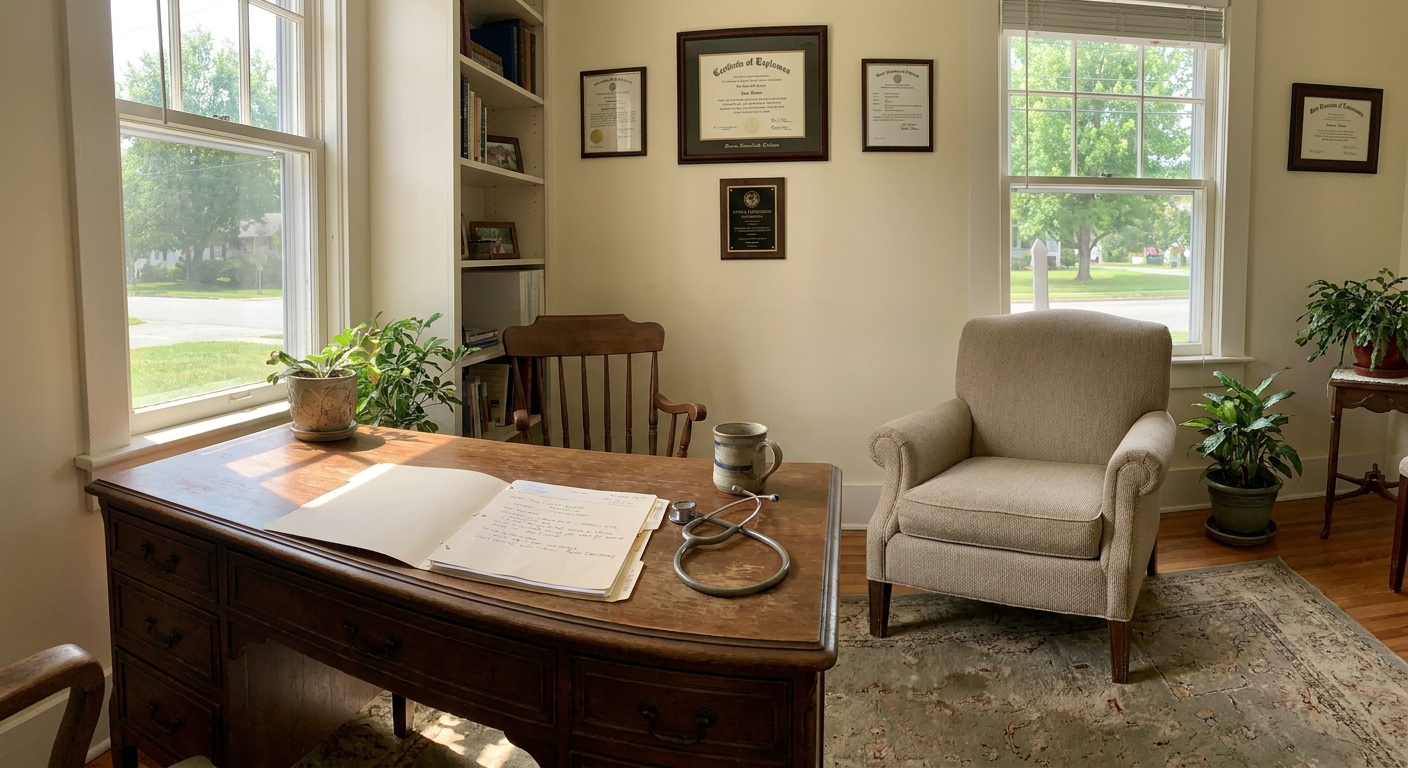
You have a list of clinics open in another tab. Maybe you already called one and hung up before anyone answered. The person you love finally said yes to getting help, or came close, and now it feels like everything rests on you choosing the right door. Right now you do not know which of the opioid treatment doctors in Salisbury NC deserves your trust. This page answers that question for one of them. It explains who Dr. Russell is, what his training means in plain terms, and what happens when your loved one sits down with him at Carolina Energetics.
What Qualifications Should Opioid Treatment Doctors in Salisbury NC Have?
At minimum, a doctor who prescribes buprenorphine needs an active medical license and a DEA registration that covers it. That is the legal floor. You should look for more than that: board certification, decades of hands-on medicine, and the training to treat the whole person, not only the opioid dependency.
In 2023, federal law dropped the special “X-waiver” that doctors once needed to prescribe buprenorphine. Today, a practitioner with a standard DEA registration covering Schedule III medicines can prescribe it for opioid use disorder. That change widened access, because more patients can find a prescriber. It also means a license on the wall tells you less than it used to. Many people can legally write the prescription, but far fewer can build a real plan around it.
It also helps to know which kind of clinic you are calling. Methadone for opioid dependency can only be given through certified opioid treatment programs, and every state has a State Opioid Treatment Authority that oversees them. Those programs often require daily visits to a dosing window early on. Buprenorphine works differently. A physician can prescribe it in a regular office setting, so your loved one can take it at home. Carolina Energetics builds its medication-assisted treatment around buprenorphine prescribed in the office, not around daily methadone dosing. If you want to compare options, the U.S. Department of Health and Human Services explains medication for opioid use disorder and how families can find treatment programs.
So when you call any clinic, ask direct questions. Who is the prescribing physician, by name? What training does that doctor have? If my loved one also has anxiety, depression, or PTSD, will the same prescriber handle it in the same visit, or will we be sent to a separate doctor? Will anyone ask about their job, their money, their home? A clinic that dodges these questions is telling you something. At Carolina Energetics, the answers point to one person: Dr. Russell. He is a Board-Certified Member of the American Board of Urgent Care Medicine, earned his medical degree at UNC-CH School of Medicine, and has been licensed to practice since 1981.
Who Is Dr. Russell, and What Does Each Credential Mean for the Person You Love?
Dr. Russell is the physician who prescribes and manages care at Carolina Energetics in Salisbury. He holds a medical degree from UNC-CH School of Medicine, was licensed to practice medicine in 1981, and has practiced for over 45 years. Each credential below tells you something about how he will treat your loved one.
Medical degree from UNC-CH School of Medicine, licensed since 1981. More than 45 years in practice means Dr. Russell has treated patients through decades of change in medicine. A complicated case does not scare him off, because he has worked through complicated cases for most of his career. For a family, that track record matters more than any single line on a resume.
Board-Certified Member of the American Board of Urgent Care Medicine. In plain terms, he has met a board’s standards in urgent care medicine. To be clear, this is not a board certification in addiction medicine, and you deserve to know that. What urgent care training builds is judgment: assessing a sick person quickly, deciding what is safe, and spotting what could go wrong. That skill carries straight into starting buprenorphine for someone who is anxious, uncomfortable, and scared.
Charter member of the American College of Emergency Physicians. Being a charter member means he was part of the organization from its founding. Emergency medicine means meeting people on the worst day of their lives without judgment. The person you love may arrive at the first appointment ashamed and braced for a lecture. A physician shaped by emergency medicine knows the job is to help, not to judge.
Full member of the American Society of Clinical Hypnosis. Hypnosis is one of the therapies Carolina Energetics uses for mental health conditions alongside opioid dependency. Full membership in this society reflects clinical training, not a stage act.
Degree in Medical Acupuncture from the American Academy of Medical Acupuncture. This training reflects a whole-person way of thinking about the body. Dr. Russell does not see your loved one as a dose to adjust. He sees a person whose stress, sleep, pain, and mood all affect the opioid dependency.
None of these credentials matter if the doctor does not have time for your loved one. At Carolina Energetics, that time goes into understanding the person’s finances, relationships, work, and daily life, not just their last use.
Why Do Most Opioid Treatment Clinics Send You Somewhere Else for Anxiety, Depression, or PTSD?
Most medication-assisted treatment clinics are built to do one thing: dispense Suboxone. When a patient also lives with anxiety, depression, PTSD, or bipolar disorder, those clinics require additional visits to a separate doctor. That means a second waitlist, a second intake, and two prescribers who may never speak to each other.
From the clinic’s side, the setup makes sense. Short medication visits keep the schedule moving. Mental health care takes longer and needs different training. So the patient gets a referral slip, and the family is left managing the space between two offices.
Picture what that gap looks like at home. Your loved one is on buprenorphine and the cravings have eased. But the panic attacks at night are worse than ever, and the psychiatry office says the next opening is weeks away. Or the mental health provider prescribes a new medication without knowing the buprenorphine dose. Each doctor is doing their part, yet nobody is holding the whole picture. For many people, trauma, anxiety, or other underlying issues are part of what drove the opioid use in the first place. When those go untreated, staying steady gets much harder.
There is a quieter cost too. A person who has been bounced from office to office stops believing anyone will help. That is why Carolina Energetics was built differently. Instead of prescribing buprenorphine and sending patients out for mental health care, Dr. Russell treats both in one appointment, with one plan.
How Can One Doctor Treat Opioid Dependency and Mental Health in the Same Visit?
Dr. Russell uses a same-visit integrated model. As the prescribing provider, he manages both the buprenorphine induction and any psychiatric medication in one appointment. A structured intake protocol finds co-occurring conditions early, and a stabilize-then-layer approach decides what gets treated first.
This is not two clinics squeezed into one building. It is one physician making every medication decision knowing what else your loved one is taking and carrying. Here is how it works.
The Structured Intake Protocol That Catches Co-Occurring Conditions
Every patient who comes to Carolina Energetics is screened with a structured intake protocol designed to catch mental health conditions, not only opioid dependency. The conditions treated span acute and chronic PTSD, bipolar types 1 and 2, depression, and generalized anxiety disorder. These often go unnamed for years. Some people have been told they are “just stressed” or “just using.” Because the screen runs on every intake, nothing depends on whether someone happens to mention it.
The intake also goes beyond medical history. Dr. Russell’s team looks closely at the patient’s financial, social, and work circumstances, along with other parts of their life. Is there a job to protect? Does someone at home still use? Is there money to keep coming back? These questions shape what personalized treatment has to look like if it is going to last.
For you as a family member, this is also where honesty pays off. Your loved one should tell the physician about every medication and substance, including any benzodiazepines like Xanax or Klonopin. Combining benzodiazepines with buprenorphine carries real risk, including dangerous slowing of breathing, so the physician has to plan around them. Telling the truth will not get your loved one judged. It lets Dr. Russell build a plan that is safe for the person in front of him.
The Stabilize-Then-Layer Approach to Managing Buprenorphine and Psychiatric Medication
Dr. Russell does not change everything at once. Under the stabilize-then-layer approach, he focuses on stabilizing the opioid dependency during the first two to three weeks. Once your loved one is steady, he begins titrating psychiatric medication.
The reason is practical. In the first days of buprenorphine, it can be hard to tell whether restlessness, poor sleep, or low mood comes from withdrawal, anxiety, or depression. If a doctor starts or changes three medications in week one, nobody can tell which change helped and which one hurt. Stabilizing first gives everyone a clear baseline, so each psychiatric adjustment can be judged on its own.
Medication is only part of the plan. Carolina Energetics also uses therapies that address the trauma and behavioral issues underneath. Cognitive behavioral therapy (CBT) helps a person notice and change the thought patterns that pull them back toward use. Brainspotting is a trauma therapy that uses where the eyes focus to help process painful experiences that are hard to talk through. Hypnosis and meditation give people practical ways to calm a body that has lived on high alert for a long time. All of this sits inside one care plan instead of being scattered across different offices.
What Do 45 Years of Medicine Look Like When Your Loved One Has Been Turned Away?
Experience shows up in what a doctor is willing to take on. A physician who has practiced for over 45 years has handled complicated cases before. To him, a PTSD diagnosis, a bipolar history, or a long medication list is a reason to plan carefully, not a reason to say no.
Maybe this sounds familiar. Your loved one finally called a clinic and heard, “We can’t take him until he’s cleared by psychiatry.” Or the visit felt so rushed and cold that they walked out and never went back. Each rejection makes the next call harder. If that is where your family is, you are not imagining it. Many people with opioid dependency and co-occurring mental health conditions get passed along instead of treated.
At Carolina Energetics, that same patient would be seen for both conditions at the same appointment. Dr. Russell would weigh the buprenorphine plan against whatever anxiety or mood medication your loved one already takes, instead of treating them as separate problems. He would also explain what the first month asks of them: stabilization in the first two to three weeks, when psychiatric medication might be titrated after that, and what to do if something feels wrong. Your loved one walks out knowing the plan, not holding a referral slip.
Experience also changes how setbacks get handled. Some people have a hard week. Some have cravings break through when life gets heavy, or slip back into use. A provider with decades behind him treats that as information and changes the plan. Responses to treatment vary between individuals, and a plan that works for one patient may need adjustment for another. What you can count on is that your loved one will be treated like a human being, with compassion, dignity, and non-judgmental care.
How Fast Can Your Loved One Start Treatment at Carolina Energetics in Salisbury?
Carolina Energetics offers same-day treatment. When it is medically right, buprenorphine induction can begin the same day as the first visit. Your loved one goes home afterward, because the outpatient model requires no hospital admission.
Here is what the path from first call to first dose looks like:
- The call. You can call on your own first, just to ask questions. Your loved one does not have to be on the line. This is a good time to ask about cost. Carolina Energetics is a self-pay practice, and the team looks at each patient’s financial situation as part of planning care.
- The visit. Your loved one comes to the office in Salisbury for the structured intake: medical history, current use, every medication, mental health screening, and the life circumstances that shape the plan.
- The timing of the first dose. Buprenorphine works best when a person is already in mild to moderate withdrawal. Taken too soon after other opioids, it can bring on sudden, harsh withdrawal. This is the most common reason a first dose waits a few hours, so being honest about the time of last use matters.
- Going home. There is no hospital stay. Your loved one sleeps in their own bed and, for many people, keeps their job.
- The first weeks. Follow-up focuses on stabilizing the opioid dependency. After two to three weeks, psychiatric medication can be layered in if it is needed, managed by the same prescriber.
As care continues, Carolina Energetics also offers care coordination with outside providers, such as a primary care doctor, and alumni programming for people further along. If your loved one needs more structure than the office setting can give, the team can refer to an intensive outpatient program.
If your loved one is still unsure, that is normal. You do not have to force a decision today. Many families start by gathering facts so they are ready when the person they love says yes. Comparing opioid treatment doctors in Salisbury NC is part of that work, and if you want a wider view of local options, Rowan County keeps a public mental health and substance use resource page you can review.
Questions Families Ask Before They Call Dr. Russell
These are the questions spouses and parents ask most when they are deciding whether Dr. Russell is the right physician for someone they love. The short answers are below.
Is Dr. Russell qualified to prescribe buprenorphine in Salisbury NC?
Dr. Russell is the physician who manages buprenorphine induction at Carolina Energetics. He is a Board-Certified Member of the American Board of Urgent Care Medicine, holds a medical degree from UNC-CH School of Medicine, was licensed in 1981, and has practiced medicine for over 45 years.
Can the same doctor treat my loved one’s opioid dependency and their anxiety or depression?
Yes. Through the same-visit integrated model, Dr. Russell manages buprenorphine induction and psychiatric medication in one appointment. He uses a stabilize-then-layer approach, stabilizing opioid dependency first over roughly two to three weeks before titrating psychiatric medication. There is no separate psychiatry referral to wait on.
What training does Dr. Russell have beyond prescribing buprenorphine?
He is a charter member of the American College of Emergency Physicians and a full member of the American Society of Clinical Hypnosis. He also holds a degree in Medical Acupuncture from the American Academy of Medical Acupuncture. That background supports a whole-person approach to opioid dependency, trauma, and mental health.
How fast can treatment start at Carolina Energetics?
Carolina Energetics offers same-day treatment. When it is medically appropriate, buprenorphine can begin the same day as the first visit. The timing of the first dose depends on how far into withdrawal your loved one is. Care is outpatient, so no hospital admission is required.
What if my loved one has PTSD or bipolar disorder along with opioid dependency?
Every intake uses a structured screening protocol to catch mental health conditions, and the practice treats acute and chronic PTSD, bipolar types 1 and 2, depression, and generalized anxiety disorder. These conditions are treated alongside opioid dependency in the same care plan, using CBT, Brainspotting, hypnosis, and meditation together with medication.
Why choose Carolina Energetics over other clinics in Salisbury?
Unlike clinics that only dispense Suboxone and send patients to separate doctors, Dr. Russell treats opioid dependency and mental health in the same visit. He brings over 45 years of medical practice and looks at each patient’s work, money, and home life. Every patient is treated like a human being, with compassionate and non-judgemental care tailored to individual needs.
When you are ready, call Carolina Energetics in Salisbury at the number on this page. You will speak with Dr. Russell’s team about starting same-day medication-assisted treatment with a physician who has practiced medicine for over 45 years and manages buprenorphine and psychiatric medication in the same appointment. Before you dial, write down three things: every medication your loved one takes, roughly when they last used opioids, and any mental health diagnoses they have been given. That one sheet of paper speeds up the intake and gives Dr. Russell what he needs to build a safe plan from the very first conversation.
Start Your Recovery With Clinicians Who Understand
If you or someone you care about is ready to address opioid dependency, our team at Carolina Energetics in Salisbury NC is here to listen without judgment. Recovery is possible, and taking the first step by reaching out can feel difficult, but you don’t have to navigate this alone. Connect with our clinical team today to learn how we can support your journey toward healing.