
Why a community MAT support group matters after treatment
Completing a medication assisted treatment (MAT) program is a major step, but it is not the finish line. Once the structure of intensive treatment fades, you may find that old triggers, new stressors, and lingering stigma feel louder than ever. A reliable community MAT support group helps you bridge that gap so your progress does not stall when formal treatment ends.
MAT is most effective when it combines FDA approved medications with counseling and ongoing recovery support that addresses the physical, psychological, mental, and emotional aspects of opioid dependency. For you, that means your medication is only one part of the picture. The people you surround yourself with, and the routines you build after graduation, are just as important as the prescription you take.
At Carolina Energetics, you are encouraged to see recovery as a long term process rather than a short term program. Community MAT support groups, alumni services, and education resources are there to help you maintain your momentum, strengthen your skills, and stay connected to others who understand what you are working toward.
Understanding community MAT support groups
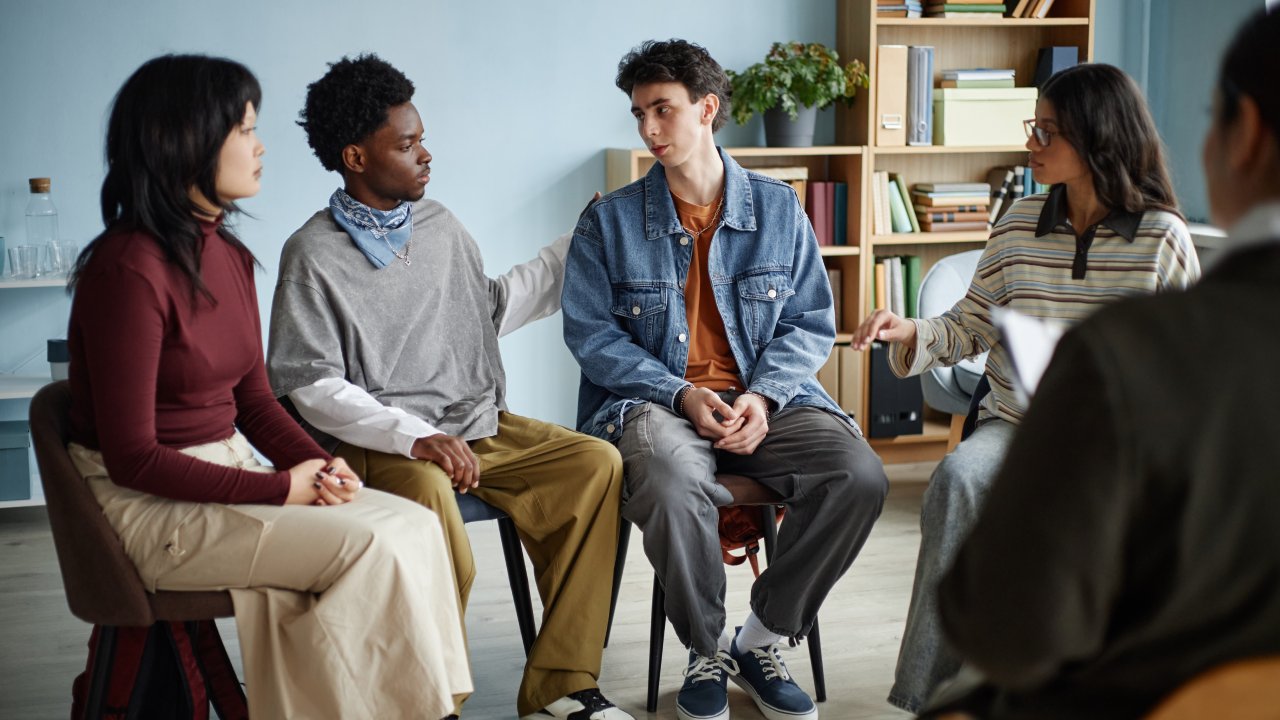
A community MAT support group is more than a meeting on your calendar. It is a place where you can talk openly about medication, cravings, and daily life without having to explain why you chose MAT in the first place.
What a MAT specific group looks like
In a MAT friendly group, you can expect:
- Peers who are also using or have used medications such as buprenorphine, methadone, or naltrexone
- Facilitators or peer leaders who understand opioid dependency treatment and respect evidence based care
- Space to discuss practical issues like dosing worries, stigma from family or other groups, and transitions in care
- A focus on both abstinence from unprescribed substances and stability on your prescribed medication
Research shows that mutual help groups for substance use can provide low barrier social support, role models, and coping strategies. When those groups welcome MAT, they become a powerful extension of your medical and therapeutic care.
Why MAT friendly support is different
Traditional recovery groups are often peer led and accessible, but some still send mixed messages about medication. Many people in MAT hear that they are “not really sober” if they take buprenorphine or methadone, which can pull you away from treatment that is saving your life.
A community MAT support group removes that barrier. Medication is recognized as a valid recovery tool, not a shortcut or a problem. Peer run models like Medication Assisted Recovery Services (MARS) explicitly acknowledge medication as a vital tool for sustaining wellness in MAT participants. Your own group may not carry that label, but the philosophy is the same. You are not asked to choose between support and science.
Common challenges after MAT and how groups help
When you complete active treatment, you do not suddenly stop facing challenges. Instead, the challenges shift. A community MAT support group helps you navigate this new stage more confidently.
Dealing with stigma and self doubt
Stigma around opioid dependency and MAT can show up in subtle and direct ways. You may hear comments from coworkers, family members, or even other people in recovery that question your choices. Stigma can make it harder to admit when you are struggling or to stay consistent with medication and follow up care.
In a MAT specific community, you can:
- Say out loud what you are hearing and how it makes you feel
- Hear how others answer similar comments without losing their footing
- Practice language that explains your recovery boundaries and medication choices
- Replace shame and secrecy with accurate information and self respect
If you want a more structured way to build this knowledge, you can take part in opioid dependency education for MAT clients, which deepens your understanding of how medications work and why they are effective.
Managing new triggers and daily stress
Life after treatment does not slow down for recovery. Work pressure, family conflict, financial strain, and health concerns can all act as triggers. Without support, it is easy to fall back into old coping habits.
Within a community MAT support group, you can break down stressful situations and explore concrete responses. Combined with resources like support group relapse prevention tools and relapse prevention education MAT, you build a toolkit that feels realistic for your actual life, not just for a classroom exercise.
Staying consistent with medication and care
Long term outcomes are stronger when medication, counseling, and recovery support are maintained over time. That consistency can be difficult if you feel alone with your MAT plan.
Groups can help you:
- Prepare for upcoming medication changes or dose adjustments
- Talk through concerns about side effects or long term use
- Stay accountable with refills, appointments, and lab work
- Coordinate care with your provider through scheduled alumni check in telehealth appointments
If you are on buprenorphine, the peer support program for Suboxone patients and long term Suboxone maintenance care can give you extra structure as you plan your maintenance or taper.
How a reliable community MAT support group works
Understanding how these groups typically operate can make it easier for you to participate actively and to choose the right setting.
Structure and facilitation
Most community MAT support groups use a blend of education, discussion, and mutual feedback. Meetings may be led by a counselor, a Certified Peer Support Specialist, or a trained alumni facilitator. Peer specialists in MAT programs have been shown to build trust, bridge gaps in care, and inspire hope among patients.
A typical meeting might include:
- A brief check in round where you share how you are doing
- A focused topic related to MAT, recovery skills, or mental health
- Open discussion, problem solving, and peer feedback
- Closing intentions or specific action steps for the week
Carolina Energetics integrates this model into MAT alumni group sessions, which are designed to help you maintain gains from treatment while adjusting to new responsibilities and routines.
In person, online, and hybrid options
Recent research shows that online and hybrid mutual help groups increase accessibility and retention, and most participants rate virtual meetings as about as effective as in person ones, even though some people experience less interpersonal connection online. For you, that means you have options.
You can:
- Attend an in person community MAT support group when you want face to face connection
- Use telehealth and virtual meetings when transportation, health, or scheduling are a problem
- Combine both to stay connected even when your circumstances shift
Carolina Energetics supports this flexibility through services like alumni check in telehealth appointments and virtual MAT program continuing care so you can access support wherever you are.
Education and relapse prevention in your MAT community
A strong community MAT support group does more than share stories. It helps you build skills and knowledge that protect your recovery over the long term.
Ongoing Recovery Education
Education helps patients understand the science and psychology behind opioid dependency recovery. Group discussions may cover:
- How medications such as buprenorphine and naltrexone work in the brain
- The stages of relapse, including emotional and mental warning signs
- Co occurring mental health conditions and their impact on cravings
- Healthy sleep, nutrition, and movement for nervous system stability
Family education programs can also help loved ones better understand MAT and recovery support.
Building a personalized relapse prevention plan
Relapse prevention is not one size fits all. Your plan needs to reflect your history, your current environment, your MAT regimen, and your goals. A community MAT support group gives you a space to refine that plan and test it in real life.
You can use:
- MAT maintenance and relapse prevention to understand how medication supports your plan
- Support group relapse prevention tools to track triggers, early warning signs, and coping strategies
- The peer accountability recovery program to build regular check ins with other alumni
Over time, you are not just reacting to crises. You are proactively shaping your days and weeks in ways that lower risk.
A reliable community MAT support group turns relapse prevention from a list on paper into a living practice that you actually use and refine.
Alumni and peer networks that sustain you
You are less likely to drift back into isolation when you stay connected to alumni and peer communities that share your commitment to recovery.
Alumni support and mentoring
Alumni programs give you the chance to both receive and offer support. As you settle into life after active treatment, you can join:
- Buprenorphine alumni support meetings if buprenorphine is part of your care
- The Sublocade patient success program if you are using extended release buprenorphine
- A broader holistic recovery alumni network that emphasizes physical, emotional, and social wellness
Mentoring others can deepen your own recovery, reinforce your skills, and remind you how far you have come.
Graduating without “falling off a cliff”
One of the biggest fears you may have before completing treatment is that you will lose your support overnight. Carolina Energetics intentionally plans for that transition.
Resources like MAT graduation support resources, MAT program continuing care, and the recovery management program North Carolina are designed to:
- Extend support beyond your last day of intensive treatment
- Keep you connected to familiar providers and peers
- Offer clear pathways back to higher levels of care if needed, without shame
Instead of a hard cutoff, you experience a gradual shift into greater independence with a safety net that remains in place.
Connecting with the wider recovery community
As your stability grows, you may feel ready to engage with the broader community and to share your experience publicly in ways that feel safe.
Community events and outreach
Participating in community events for MAT recovery lets you:
- Meet others in recovery in low pressure, social settings
- Practice talking about MAT in ways that are honest and comfortable for you
- See yourself as part of a larger movement toward understanding and compassion
Sharing your story or helping with education efforts can challenge stigma in your area and offer hope to people who are still unsure whether treatment is right for them.
Balancing traditional groups and MAT friendly spaces
You might be interested in traditional mutual help groups, such as 12 step meetings, in addition to your MAT support group. Recent studies show that participation in mutual help groups like Narcotics Anonymous can be linked to modest reductions in substance use and opioid dependency severity. At the same time, stigma against medications for opioid dependency treatment is still common in some 12 step settings, and many groups do not fully recognize people using MAT as “in recovery”.
You do not have to choose one or the other. With preparation and clarity about your boundaries, you can:
- Use MAT friendly groups as your primary support
- Attend traditional groups when they feel helpful, while protecting your medication decisions
- Step back from any setting where you feel pressured to stop evidence based care
Carolina Energetics can help you plan this balance so that every part of your support system aligns with your long term goals rather than working against them.
Taking your next step with a community MAT support group
Your recovery did not end when you completed active MAT treatment. In many ways, it started a new chapter. A reliable community MAT support group gives you structure, understanding, and accountability in that chapter so you do not have to navigate it alone.
You can:
- Join MAT alumni group sessions to stay regularly connected
- Strengthen your skills with relapse prevention education MAT and related resources
- Build lasting relationships through the holistic recovery alumni network
If you are ready to reinforce your progress, you can reach out to Carolina Energetics to explore which community MAT support group, alumni program, or continuing care option fits your current stage of recovery. With the right community around you, long term success becomes more realistic and more sustainable.