
Expertise provided by Dr. Russell, David N Russell MD
Dr. Russell has treated people in Salisbury, NC who walked into Carolina Energetics eating their own prescribed fentanyl patches because every other provider in the area had turned them away. That is not a story we tell for shock value. It is the kind of person who has ended up here after being called hopeless somewhere else. When you start searching for suboxone doctor credentials in Salisbury, NC, you are really asking one blunt question: is the person prescribing this actually qualified to handle someone this sick? Just listen. This page answers that with real names, real board certifications, and real years in the field, not slogans.
Love is freely given, but trust is earned. So we are going to earn it the only way that counts: by showing you exactly who will be sitting across from you, what they trained in, and how their experience shapes the decisions they make about your care.
What Should You Check About Suboxone Doctor Credentials Salisbury NC Before You Trust a Provider?
Before you trust anyone with opioid dependency treatment, verify two things: that the provider is board certified in a relevant field, and that they have real firsthand experience managing complex cases, not just a prescribing authorization on paper. Those are not the same thing.
Here is the part most people do not know. Prescribing buprenorphine no longer requires the old federal waiver, so almost any licensed provider can write for it now. Suboxone treatment uses buprenorphine naloxone, a combination medication that includes naloxone specifically to lower the risk of misuse. That change opened access, which is good. It also means a provider who has never watched someone go through severe withdrawal, never handled a polysubstance case under pressure, and never treated a co-occurring mental health condition can still legally hand you a prescription. A prescription is not a plan. A prescription written by someone who does not understand your tolerance, your history, or your fear is a coin flip.
You can confirm any provider’s federal registration for free through the government’s own NPI registry, and buprenorphine treatment delivered in an office setting is a recognized, evidence-based approach according to SAMHSA. Those are the floor, not the ceiling. What separates a qualified clinician from a prescriber with a login is what they have actually seen and treated. A provider who spent decades in an emergency room has watched opioid dependency at its worst. A provider trained in psychiatry knows that the trauma and anxiety underneath the drug use may pull someone back if nobody treats them. When you research suboxone doctor credentials in Salisbury, NC, ask who, not just whether. Good doctors welcome that question, and the sections that follow are our honest answer.
Who Is Dr. Russell, and Why Does 45 Years of Medicine Matter to You?
Dr. Russell brings more than 45 years in medicine, including 25 years as an Emergency Room physician and a full decade focused specifically on treating opioid dependency and co-occurring mental illness. That means he has managed withdrawal, overdose, and complicated polysubstance cases in real time, when the clock was running and there was no room to guess.
Twenty-five years in an emergency room changes how a physician thinks. You see people at the worst moment of their lives. You learn to read a body fast, to spot the difference between someone who is stable and someone who is quietly crashing, and to make careful decisions with incomplete information. That is not a resume line. It is the reason one patient who scared other clinics did not scare him. He has been in the room when it was truly darkest.
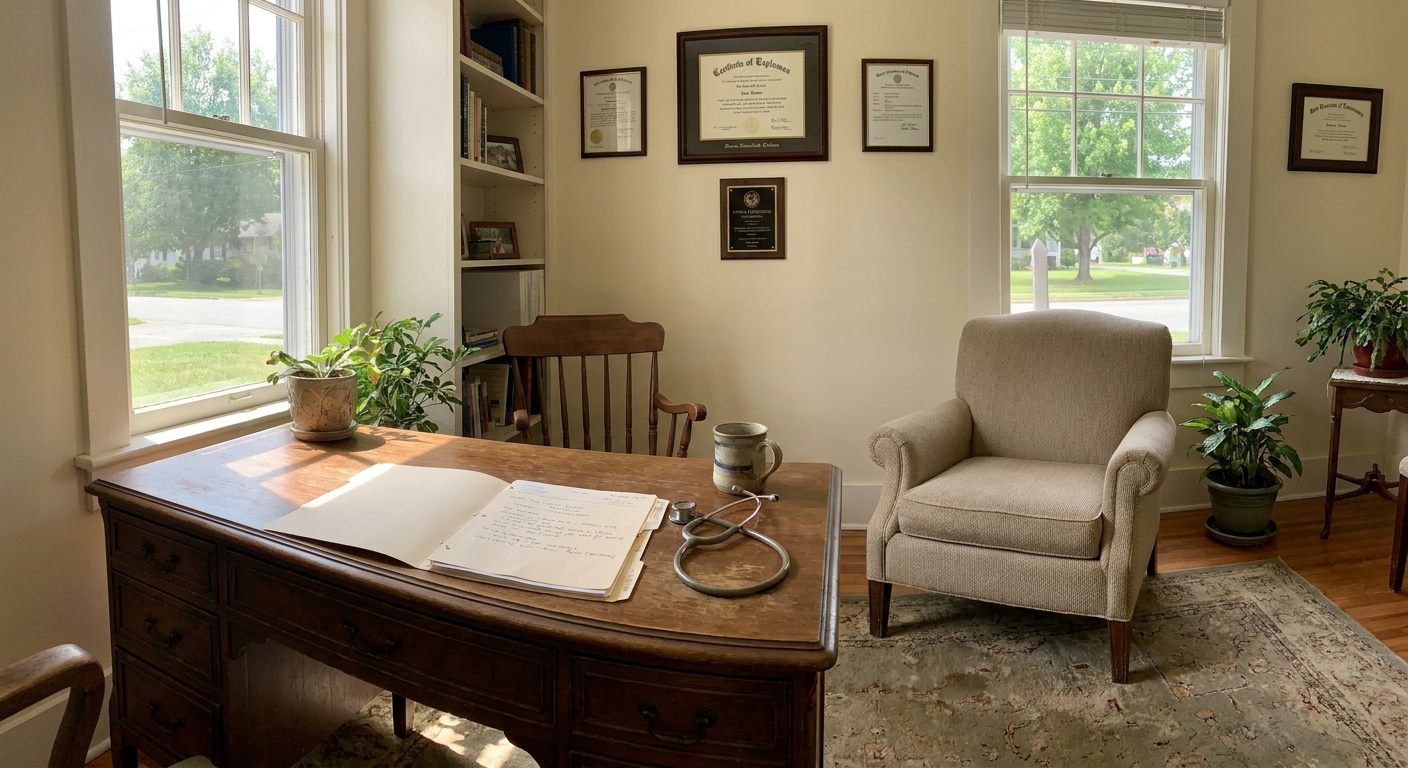
His formal training is broad on purpose. He holds a Bachelor of Arts in Psychology and is a graduate of the University of North Carolina at Chapel Hill and the UNC-CH School of Medicine. He is Board Certified by the American Academy of Urgent Care Medicine and a Full Member of the American Society of Clinical Hypnosis. He is qualified to conduct Brain Spotting, a technique used to reduce chronic anxiety and PTSD, which matters because trauma is so often an underlying issue that drives opioid use in the first place.
He did not stop there. He studied Eastern Medicine deeply enough to become a past member of the American Academy of Medical Acupuncture, and he holds a Therapy Degree from the Alliance of Divine Love. Put plainly, he does not treat opioid dependency as a prescription problem. He treats the whole person in front of him, because the drug is usually the symptom, not the root.
What Makes Dr. Guinn Qualified to Treat Your Mind and Your Body at Once?
Dr. Guinn is a dual board-certified Family Nurse Practitioner and Psychiatric Mental Health Nurse Practitioner with over twenty years of diverse clinical experience, including addiction medicine, primary care, and work with rural and underserved populations. Dual certification is the whole point: he is trained to manage both your physical health and your mental health in the same visit.
That combination is rare, and it is exactly what many people with opioid dependency need. Depression, anxiety, PTSD, and chronic pain do not sit politely in a separate waiting room. They are tangled up with the substance use. A provider certified only in family practice can prescribe buprenorphine naloxone but may have to send you elsewhere for the psychiatric side. A provider certified only in psychiatry may not be equipped for the primary care needs that come with years of hard living. Dr. Guinn is certified for both, so your care does not get split into pieces that never talk to each other.
His work is grounded in evidence-based, compassionate care, with a strong emphasis on interdisciplinary collaboration and access through telehealth, which makes care available to people who live near Salisbury as well as those farther out. He earned his Doctor of Nursing Practice from Madonna University and completed a Post-Master’s PMHNP program at Maryville University, and he has stayed committed to mentorship and system-level improvement in behavioral health.
He is also still teaching. Dr. Guinn serves as an Adjunct Instructor in the Department of Psychiatry at Michigan State University College of Human Medicine, where he supports medical education and clinical training. Think about what that tells you. The provider managing your care is qualified enough that a medical school trusts him to train the next generation of clinicians in how to treat substance use disorder and mental health conditions. When a family member is verifying suboxone doctor credentials in Salisbury, NC before a loved one walks in the door, that is the kind of signal worth weighing.
What Does Their Combined Experience Mean for Your Treatment Plan?
Together, Dr. Russell and Dr. Guinn cover the two halves that most opioid dependency care splits apart: the acute medical side and the psychiatric side. In practice, that means you may be able to have both the physical and the mental health dimensions of your dependency managed under one roof, often in one visit, by doctors who have done this for decades.
Here is why that matters for you specifically. Dr. Russell’s emergency medicine background means he has managed acute withdrawal, overdose, and polysubstance cases when the stakes were highest, so he is comfortable with the physical realities of getting you stabilized on medication. Dr. Guinn’s dual certification means the anxiety, depression, trauma, or chronic pain riding underneath your opioid use can be treated as part of the same plan, not shipped off to a stranger with a three-week wait. Fragmented care is one of the reasons treatment sometimes fails. When your medication provider and your mental health provider are the same team, nothing falls through the crack between them.
The underlying issues are often a real challenge. That is why Dr. Russell’s Brain Spotting and clinical hypnosis training are not extras. Chronic anxiety and PTSD are among drivers of relapse. If the only thing anyone ever treats is the withdrawal, the trauma that started this may still be sitting there waiting. Treating both is one approach toward working on long-term recovery instead of just surviving another crisis and coming back in six weeks.
This also shapes how the team talks to you. We speak frankly to a patient. If a previous approach failed, we will say so and explain why this plan is built differently, rather than pretending every case is simple. Honesty is part of the treatment, because no message can cut through distrust if it is not true.
How Does Carolina Energetics Build Your Outpatient Plan Around You?
Carolina Energetics uses an individualized outpatient model, and that is a deliberate clinical decision, not a shortcut. Outpatient treatment may be preferable in some cases because some patients find it easier to comply with treatment when they remain in a favorable home environment rather than a hospital or inpatient facility, and because it often costs less, which is worth confirming with your insurance before you start.
Think about it honestly. Inpatient means disappearing for weeks, significant cost, and the disruption of your whole life. For some people that becomes the reason they never start at all, or the reason they do not stick with it. Staying home while medical providers manage your care may remove a barrier that stops people from getting help. When treatment fits into your real life instead of tearing it apart, you may be more likely to keep showing up, and showing up is a large part of recovery.
Before any plan is written, the team assesses the things that help determine whether treatment may work: your current tolerance, what medications you are already taking, what support you have at home, and whether you truly understand the instructions. There are too many combinations of those factors for any one-size plan to be honest. So treatment here is very individualized, built for the specific person sitting in the room, not copied from a template.
The philosophy underneath all of it is simple. Every patient deserves to be treated like a human being, with compassionate and non-judgmental care, no matter how sick they are or how many times treatment failed before. We have treated people other clinics refused, including complex polysubstance cases and severe opioid dependency. If you were made to feel like a cash cow or a lost cause somewhere else, we work hard to make sure that will not be your experience here.
Questions Families Ask About Our Clinical Team
What board certifications do the providers at Carolina Energetics hold?
Dr. Russell is Board Certified by the American Academy of Urgent Care Medicine. Dr. Guinn is dual board-certified as a Family Nurse Practitioner and a Psychiatric Mental Health Nurse Practitioner. Between them, that covers urgent medical care, family practice, and psychiatry.
Do you have a provider qualified to treat co-occurring mental health conditions?
Yes. Dr. Guinn is dual board-certified in Family and Psychiatric Mental Health, so he can treat depression, anxiety, PTSD, and other conditions alongside opioid dependency. Dr. Russell is also trained in Brain Spotting and clinical hypnosis for trauma and chronic anxiety.
How many years of experience treating opioid dependency does the team have?
Dr. Russell has spent a decade focused specifically on treating opioid dependency and co-occurring mental illness, within more than 45 years in medicine and 25 years as an ER physician. Dr. Guinn brings over twenty years of clinical experience, including addiction medicine and work with underserved populations.
Why do you use an outpatient model instead of inpatient treatment?
Some patients find that compliance is easier in outpatient care because they stay in a favorable home environment instead of a hospital, and because the cost is often lower, which you can verify against your insurance. That may let more people start and stay in treatment. The team individualizes each plan based on tolerance, current medications, home support, and how well the patient understands the instructions.
Is your clinical director actively teaching other providers?
Yes. Dr. Guinn serves as an Adjunct Instructor in the Department of Psychiatry at Michigan State University College of Human Medicine, where he supports medical education and clinical training for the next generation of clinicians.
Will you treat me if other clinics turned me away?
Yes. Our clinical team has treated patients other providers refused, including complex polysubstance cases and severe opioid dependency. Being turned away before does not make you a lost cause here.
Call Carolina Energetics in Salisbury, North Carolina to schedule an intake assessment with Dr. Russell or Dr. Guinn, and verify for yourself that your treatment will be managed by board-certified doctors with decades of addiction medicine experience. When you check suboxone doctor credentials in Salisbury, NC, bring your questions to that first call. A team confident in its qualifications will welcome them, because that first honest conversation is where working toward recovery can start.
Start Your Recovery With a Team You Can Trust
Finding the right care for opioid dependency means working with providers who understand both the medical and emotional challenges you’re facing. Our clinical team in Salisbury, NC brings together experienced professionals who are committed to walking alongside you through every stage of treatment. If you’re ready to explore how medication-assisted treatment can support your path forward, we’re here to answer your questions and help you take that first step.
Individual results vary. Every person’s history, health, and response to treatment are different, and no outcome is guaranteed.