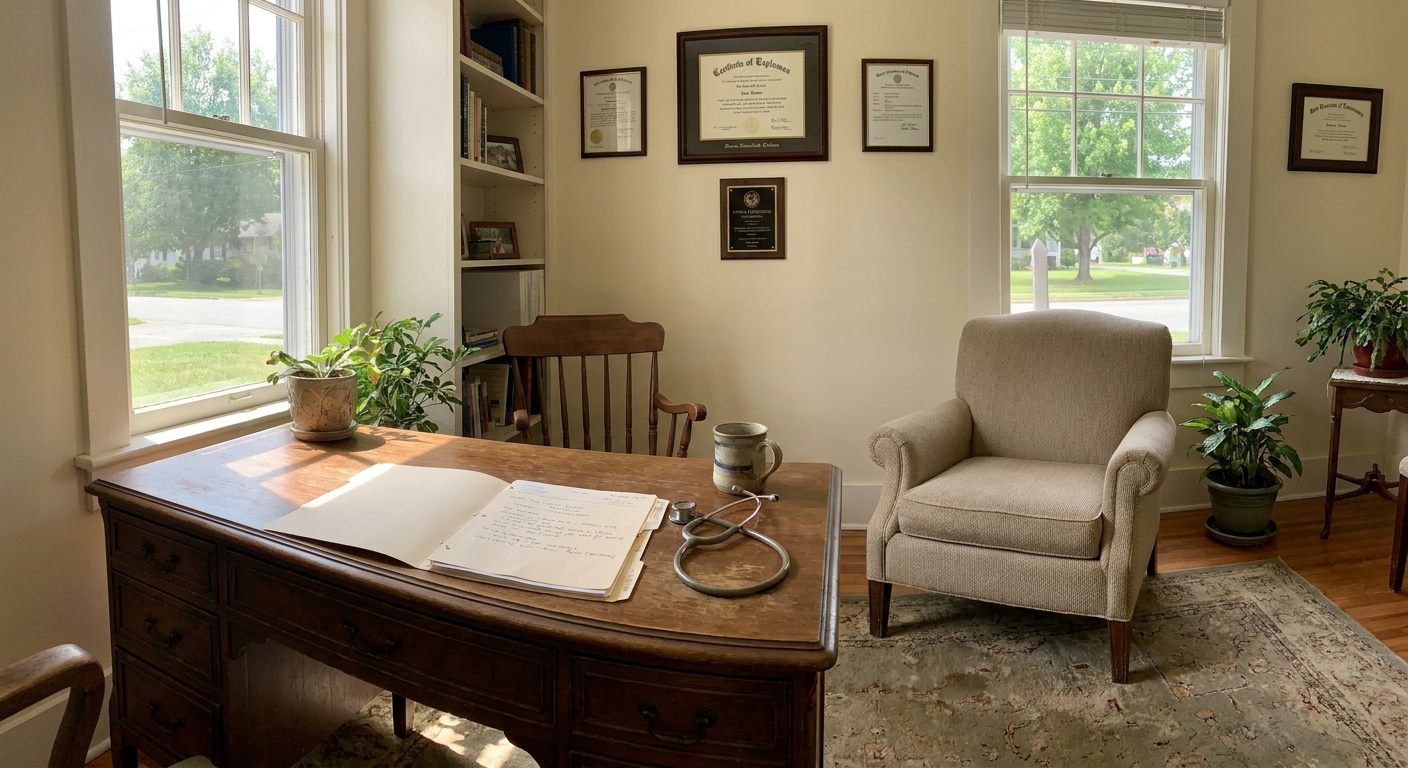

Expertise provided by Dr. Russell, David N Russell MD
Dr. Russell can still recall the exact moment a mother called Carolina Energetics to verify his credentials before bringing her son in. She did not do it because she doubted the clinic. She did it because the previous provider her son saw turned out to have no active DEA registration, and he handed her son prescriptions that no pharmacy would fill. That phone call is a big part of why this page exists. When you are looking for an accredited opioid clinic Salisbury NC families can verify for themselves, you deserve to know which licenses matter, where to check them yourself, and what they actually mean for your safety before you ever walk through the door. Love is freely given, but trust is earned. So let us show you how to earn ours the honest way, by looking us up.
What Does an Accredited Opioid Clinic Salisbury NC Actually Have to Prove?
A legitimate opioid treatment provider must hold three core credentials before it can prescribe a single dose: North Carolina Medical Board certification, DEA certification to prescribe controlled substances like buprenorphine, and SAMHSA certification. Carolina Energetics holds all three. None of them is optional, and none of them overlaps with the others.
Think of these three credentials as three different keys that open three different doors. North Carolina Medical Board certification is the key that says a real physician, licensed in the state, stands behind the care. DEA certification is the federal key that legally allows that physician to prescribe buprenorphine, which is a controlled substance. SAMHSA certification is the key that recognizes the practice meets federal standards for opioid treatment. If a provider is missing even one of these, something in the chain breaks. The prescription may not be legal, the pharmacy may refuse to fill it, or the treatment may not meet the standards your loved one’s safety depends on.
North Carolina takes this seriously. The state maintains its own Mental Health Licensure and Certification Section precisely so that treatment for substance use disorder is not handed out by anyone who decides to hang a sign. This matters most for the person who has already been burned once. If you or your loved one saw a provider who felt more like a cash cow than a physician, someone who wrote a prescription and never asked a real question, that experience was not treatment. It was a transaction. Real licensing is what separates the two.
How Can You Verify Dr. Russell’s License Before You Ever Call?
You can confirm Dr. Russell’s license yourself by searching his name on the North Carolina Medical Board provider lookup site. His current licensing, the clinic’s address, and its telephone number are all listed publicly on the NCMB site. You do not have to take our word for anything. That is the point.
Here is who you will find when you look. Dr. Russell earned his Medical Degree from the UNC-Chapel Hill School of Medicine, along with Bachelor of Arts degrees from UNC-Chapel Hill in Psychology and Zoology, and has practiced medicine for over 45 years. He is a Board-Certified Member of the American Board of Urgent Care Medicine and a charter member of the American College of Emergency Physicians. That background matters more than it might sound at first. Managing withdrawal safely means making acute care decisions in real time, reading how a body is responding, and adjusting. The physician overseeing your buprenorphine has spent decades making exactly those calls, in urgent and emergency settings, before he ever opened an opioid treatment practice.
We publish our North Carolina Medical Board information openly because legitimacy is not something you are supposed to take on faith. It is a fact you can confirm in a few minutes on a public state website. We do not publish our DEA credentials, and no responsible clinic does, because those numbers are protected for security reasons. That is normal. What you can and should verify is the current licensing, the physician’s name, and the clinic’s real Salisbury contact information, all of which sit on the NCMB site. When you can match the name on the state site to the name answering the phone, you know exactly who is managing your medication before you schedule the first visit. That is the whole reason we point families to the source instead of asking them to trust a logo.
Why DEA Certification Is the Line Between Real Treatment and a Worthless Prescription
DEA certification is the federal registration that legally allows a provider to prescribe buprenorphine. Without it, no prescription for that medication is worth the paper it is printed on. Buprenorphine is a Schedule III controlled substance under federal classification, which means a provider needs active DEA certification to prescribe it at all.
This is not a formality. When a provider loses DEA certification, whether from prescribing violations, fraud, or simply letting the registration lapse, their legal authority to prescribe buprenorphine ends the same day. That is exactly what happened to the young man whose mother called us. His previous prescriber had written scripts the pharmacy would not fill because the registration was no longer active. Picture that from the patient’s side. You finally decide to get help, you do the hard part, you show up, and then the medication that was supposed to hold you steady simply does not exist. That kind of failure does not just waste a visit. It can send someone right back to using, because the withdrawal does not wait for paperwork to be corrected.
Carolina Energetics maintains active DEA certification year over year, and Dr. Russell keeps that registration current through ongoing Continuing Medical Education. That is the quiet work behind a credential. It is not earned once and framed on a wall. It is renewed, documented, and kept live so that the day you or your loved one needs a prescription filled, it is filled. When the whole point of medication-assisted treatment is stability, the provider’s own credentials have to be just as stable.
What SAMHSA Certification Tells You That the Website Cannot
SAMHSA certification is federal recognition that a provider meets the government’s standards for delivering opioid treatment services. It is a signal that a practice has been measured against a national bar for how this care should be delivered, not just a claim a clinic makes about itself.
Families can check this independently. The Substance Abuse and Mental Health Services Administration keeps a public Opioid Treatment Program Directory that lists programs by state, so you are not left guessing whether a provider’s federal standing is real. Use it. Use every tool that lets you confirm rather than assume. After you have felt rejected or judged by the healthcare system once, verifying for yourself is not paranoia. It is self-protection, and it is reasonable.
Here is what SAMHSA certification does not do, and it is worth being frank about. It does not tell you whether you will be treated like a human being when you walk in. It does not tell you whether the physician will speak frankly to a patient about what recovery actually asks, or whether the front desk will make you feel like a problem to be processed. Credentials confirm that a provider is allowed to do this work and meets a federal standard for it. They do not, on their own, describe the experience of compassionate, non-judgmental care. That gap, between what a credential proves and how care actually feels, is the one that matters most to families, which is why compassionate, non-judgmental care has to stand alongside the licenses rather than behind them.
Why Credentials Alone Do Not Tell You How Treatment Happens
Licensure proves a provider can legally treat opioid dependency, but the clinical model is what determines how treatment fits into your life, though how well it fits will depend on your unique situation and needs. At Carolina Energetics, the model is same-visit integrated care. That means the same prescribing provider who manages buprenorphine induction also manages psychiatric medication for the mental health conditions that often accompany opioid dependency.
This is only possible because of the full set of credentials the clinic holds. A provider needs DEA prescribing authority to start buprenorphine and clinical training in behavioral health to treat co-occurring conditions like PTSD, bipolar disorder, depression, and generalized anxiety disorder in the same setting. Most programs cannot do both under one roof. They hand you buprenorphine, then refer you out to a separate psychiatrist, which means two appointments, two waits, and two chances to fall through the cracks. When someone is already exhausted and barely holding on, a referral to another building next month is often the same as no help at all.
Dr. Russell uses a stabilize-then-layer approach. First the medication quiets the withdrawal and cravings enough that a person can think clearly again. Then, with that foundation in place, the underlying issues get addressed: the trauma, the anxiety, the behavioral patterns that were driving the use long before the first pill. Treating those two things separately, by two providers who never talk to each other, is how people cycle through treatment and end up believing they have failed. They did not fail. The structure failed them. Integrated care under one licensed provider is built to close that gap, and it is a direct outgrowth of holding both the prescribing authority and the clinical training at once.
The Training That Goes Beyond a Medical License
A medical license lets a physician prescribe, but the therapies that can support recovery require training that basic licensure never covers. Carolina Energetics pairs medication-assisted treatment with several evidence-based approaches, each drawn from the underlying issues that keep people using.
Cognitive Behavioral Therapy provides the structured starting frame, giving a person concrete tools to recognize and interrupt the thoughts that lead back to use. Brainspotting is used for trauma that lives in the body, the somatically stored kind that talking alone rarely reaches. Clinical hypnosis addresses the entrenched habit loops that keep pulling a person back even after the physical withdrawal is over. Alongside these, individual counseling and family sessions bring the people who love the patient into the work, because opioid dependency is never a problem that lives inside one person alone.
The hypnosis piece is a real credential, not a gimmick. Dr. Russell is a full member of the American Society of Clinical Hypnosis, which requires specialized training well beyond a medical degree. His broader training runs even wider: a degree in Medical Acupuncture from the American Academy of Medical Acupuncture, study of Eastern Medical Arts through Pranic Healing, and a Divinity degree and therapy license through the Alliance of Divine Love, where he was ordained in 2016. Hypnosis exists in the program for one reason. It is a tool we use for the mental health issues surrounding opioid dependency, and Dr. Russell uses it because it can be helpful for some of the people he treats. This is what an accredited opioid clinic in Salisbury NC looks like once you get past the paperwork. The licenses get you in the door legally. The training, the integrated model, and the willingness to treat the whole person are what actually bring a new sober life within reach. It is darkest right before dawn, and the right provider is the one who has walked enough people through that dark stretch to know the way out.
Common Questions About Verifying Our Licensing
How do I verify that Carolina Energetics is a legitimate opioid clinic in Salisbury NC?
Search Dr. Russell’s name on the North Carolina Medical Board provider lookup site. You will find his current licensing along with the clinic’s address and telephone number listed publicly, so you can confirm exactly who is managing your care before you call.
What licenses does a provider need to prescribe buprenorphine legally in North Carolina?
A provider needs North Carolina Medical Board certification, active DEA certification to prescribe Schedule III controlled substances, and SAMHSA certification for opioid treatment. All three are required. Missing any one of them puts the legality and safety of your treatment at risk.
What happens if a clinic loses its DEA certification?
Losing DEA certification immediately ends the provider’s legal authority to prescribe buprenorphine or any controlled substance. The clinic can no longer offer medication-assisted treatment, and any prescriptions written after that point will not be filled by a pharmacy.
Does Carolina Energetics accept insurance for medication-assisted treatment in Salisbury NC?
We work with self-pay patients and can discuss your options directly. Because plans vary widely, call the clinic and let us go over the details with you before your first visit rather than leaving you to guess.
What is the difference between a licensed opioid clinic and a provider who just prescribes Suboxone?
A licensed opioid clinic holds North Carolina Medical Board, DEA, and SAMHSA credentials and integrates behavioral health with medication management. A provider who only writes Suboxone prescriptions may lack the training or licensing to manage co-occurring mental health conditions or offer therapies like Cognitive Behavioral Therapy, Brainspotting, and clinical hypnosis alongside the medication.
How long has Dr. Russell been practicing medicine in North Carolina?
Dr. Russell earned his Medical Degree from the UNC-Chapel Hill School of Medicine and has practiced medicine for over 45 years. He is a Board-Certified Member of the American Board of Urgent Care Medicine.
Confirm the Credentials, Then Take the First Step
Do the thing the mother in our opening did. Look Dr. Russell up on the North Carolina Medical Board provider lookup site, confirm his current licensing and the clinic’s Salisbury NC contact information with your own eyes, and then call Carolina Energetics at the published clinic number to schedule your first same-visit integrated assessment for medication-assisted treatment. When you call, ask us to walk you through what that first visit involves. You will be treated like a human being from the first sentence, and you will not be asked to trust anything you cannot verify for yourself.
Begin Your Recovery With a Team You Can Trust
If you’re considering opioid treatment in Salisbury NC, knowing that a clinic meets rigorous state and federal standards can make all the difference in your decision. Our accreditations reflect our commitment to evidence-based care, and our team is ready to answer your questions about how our programs work and whether they’re right for you or your loved one. Recovery is possible, and it starts with a conversation.
Individual results vary. Treatment outcomes depend on each person’s circumstances and needs.