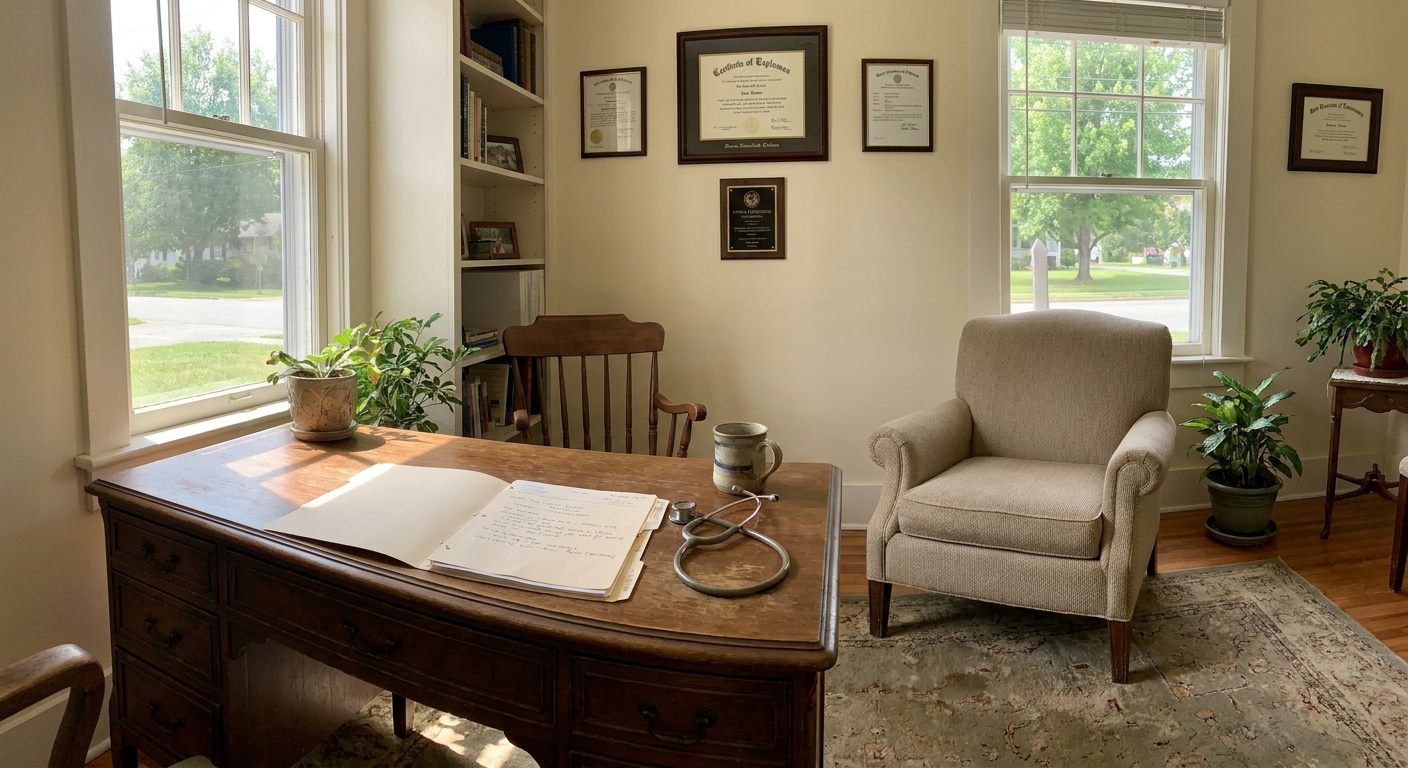

Expertise provided by Dr. Russell, David N Russell MD
When Dr. Russell opened Carolina Energetics in Salisbury, NC, the first thing he secured was not a logo or a website. It was federal DEA registration to prescribe buprenorphine products, along with state licensure under the North Carolina Medical Board for the entity Carolina Energetics PC. Without those two pieces of paper, an accredited suboxone clinic in Salisbury, NC cannot legally exist or write a single prescription for medication-assisted treatment. If you have been burned before by a cash-only operation that treated you like a revenue source instead of a patient, you already know why this matters. Love is freely given, but trust is earned. This article shows you exactly what credentials we hold and how to verify every one of them yourself.
What Accreditation and Licensing Mean for an Accredited Suboxone Clinic in Salisbury, NC
Licensing is legal permission to operate and to prescribe controlled medications. Accreditation is a voluntary, outside review of a clinic’s quality. Both protect you, but only licensing is required by law, and no clinic can legally treat opioid dependency without it.
Think of it this way. A driver’s license is the law’s permission to be on the road at all. A five-star safety rating on your car is something extra, earned by passing tests nobody forced the manufacturer to take. A suboxone clinic works the same way. State licensure and DEA registration are the license to be on the road. Accreditation from a body like CARF or the Joint Commission is the safety rating on top. You should not accept care from any provider who lacks the first, and you have every right to ask about the second.
This distinction gets buried on most websites, and that silence works against you. Some clinics lean on soft words like “certified” or “accredited” without ever naming the agency that granted the credential. When you cannot name the agency, you cannot verify the claim. That is the gap this page closes. Carolina Energetics operates as an accredited clinic under the North Carolina Medical Board, which licenses both the entity Carolina Energetics PC and each provider individually, and both prescribing providers hold DEA certification to maintain an Opioid Dependency Treatment clinic. Every one of those facts sits in a public record you can check before you ever walk through the door. That is the difference between a clinic that talks about trust and one that hands you the tools to earn it.
North Carolina Medical Board Licensure for Carolina Energetics PC
Carolina Energetics PC holds licensure through the North Carolina Medical Board to operate as an opioid dependency treatment clinic in the state of North Carolina. The North Carolina Medical Board licenses each provider and the clinic itself under the name Carolina Energetics PC, so the entity license sits separate from the individual credentials each provider carries.
That separation matters more than it sounds. A physician can hold a spotless personal license and still run an operation that the state has never authorized to deliver opioid treatment. When the clinic entity is licensed, the state is standing behind the whole practice: the building, the record-keeping, the way controlled medications are stored, and the way patient consent is documented. In North Carolina, that oversight is not optional and it is not a formality. It is the floor every legitimate MAT provider has to stand on.
You may have run into clinics that skip this step. They set up fast, take cash only, hand out prescriptions, and disappear when scrutiny arrives. People in opioid crisis get treated like a cash cow instead of a patient with a medical condition. We built Carolina Energetics to be the opposite of that. The entity license under Carolina Energetics PC means there is a named business, registered with the state, that is accountable for your care and can be held to a standard. When you look us up, you are not just checking whether one doctor is real. You are confirming that the clinic where you will receive treatment is recognized by North Carolina to do exactly this work.
Which Credentials Let Our Providers Prescribe Buprenorphine?
Both prescribing providers at Carolina Energetics hold federal DEA certification to maintain an Opioid Dependency Treatment clinic, which means the government has verified their authority to prescribe buprenorphine products. Dr. David N. Russell, MD, is the director and holds the X-Waiver from the DEA. Dr. Guinn is a Psychiatric Nurse Practitioner with a doctorate degree who holds similar DEA credentialing.
The X-Waiver is worth understanding, because its history tells you something real about experience. For years, prescribing buprenorphine required a provider to complete extra training and apply for a special DEA waiver, nicknamed the X-Waiver. Federal law removed that separate requirement in 2023, so a provider today does not need it to prescribe. But the fact that Dr. Russell earned the X-Waiver before that change means he was doing this work back when it demanded more hoops, more training, and more commitment than the law now requires. That is years of medication-assisted treatment experience, not a credential picked up last month.
Opioid use disorder is a treatable medical condition, not a moral failing, according to the National Institutes of Health, and it deserves a provider who has treated it long enough to speak frankly to a patient about what recovery actually asks. That is what these credentials represent. Dr. Russell and Dr. Guinn are not names on a wall. They are two licensed clinicians, verified by both the DEA and their own state boards, authorized to start you on buprenorphine and manage your care over time. When someone asks whether the people prescribing their medication are truly allowed to do it, this is the answer, and it is one you can check yourself in a public registry.
Why Does Federal Law Require DEA Registration to Prescribe Suboxone?
Federal law requires DEA registration because buprenorphine, the active medication in Suboxone, is a controlled substance classified as Schedule III under the Controlled Substances Act. Without that registration, a provider cannot legally prescribe it, full stop. The requirement exists to keep unqualified and unlicensed people from handing out controlled medications.
The Drug Enforcement Administration keeps a public registry of every provider authorized to prescribe controlled substances. That registry is not a private club. It is a safeguard built for you. When you confirm that a prescriber appears in it, you are confirming that the federal government has looked at that person’s credentials and cleared them to work with a medication that carries real power and real risk when handled carelessly. This is the single most important check you can run on any suboxone provider, anywhere.
Here is why this protects you specifically. People in active opioid dependency are often desperate, exhausted, and out of options, and desperation is exactly what predatory operators look for. A clinic with no DEA registration writing prescriptions is either breaking the law or not really prescribing what it claims. Federal oversight is what stands between a person seeking help and an operation that would treat them as easy money. Buprenorphine delivered in an office setting is a recognized, evidence-based approach that SAMHSA supports precisely because it expands safe access to care. Registration is what makes that access safe instead of reckless. Both of our providers hold it, and you can verify both.
What Does North Carolina Require of an MAT Clinic?
North Carolina requires MAT clinics to meet specific standards for documentation, patient consent, controlled substance handling, and coordination with behavioral health services. Those requirements come from North Carolina General Statutes Chapter 90 and the rules the NC Medical Board sets for opioid treatment programs. Carolina Energetics meets all of them.
The behavioral health piece is the part many people do not expect. State law recognizes that medication alone is rarely enough to bring a new sober life. Buprenorphine can quiet cravings and withdrawal, but it does not touch the trauma, the underlying issues, or the behavioral patterns that often sit beneath opioid dependency. That is why North Carolina expects MAT clinics to pair medication with counseling and psychosocial support, whether delivered directly or through the care coordination Carolina Energetics maintains with trusted outside providers. It is not red tape. It is the state saying, out loud, that a prescription pad is not a treatment plan.
The rest of the requirements protect you in quieter ways you may never see day to day. Documentation standards mean your care is recorded and continuous, not scribbled and forgotten. Patient consent rules mean you are told what you are taking and why, and you agree to it as an informed adult. Controlled substance handling rules govern how medication is prescribed and tracked, so nothing goes missing or gets diverted. Together these standards are the reason a licensed clinic behaves differently from an unregulated one. At Carolina Energetics, meeting them is simply the baseline for treating you like a human being with a medical condition, which is the whole point.
What Do CARF and Joint Commission Accreditation Really Measure?
CARF and the Joint Commission are independent bodies that conduct multi-day audits of a program’s clinical protocols, staff credentials, patient safety procedures, patient rights, and outcomes tracking. Their accreditation is voluntary, which means a clinic chose to open its files to outside reviewers who answer to no one inside the building. It signals a review that goes beyond the baseline the state already requires.
These audits are demanding. Reviewers examine how a clinic documents care, how it trains its people, how it handles emergencies, and how it protects the dignity and rights of every patient. Passing means an outside authority looked hard and found the program sound. That is genuinely worth something, and it is fair for you to want it.
Here is the honest part, because you deserve frankness and not a sales pitch. Carolina Energetics meets every state and federal requirement to operate as a licensed opioid dependency treatment clinic in North Carolina, verified through the NC Medical Board and the DEA. If a voluntary accreditation like CARF or the Joint Commission matters to you, do not take any clinic’s word for it, including ours. Ask directly which voluntary accreditations the clinic holds, and ask to see documentation. Any provider worth your trust will hand it over without hesitation. A clinic that dodges the question or answers in vague marketing language is telling you something. Just listen.
How Do You Verify Carolina Energetics’ Credentials Yourself?
You verify our credentials the same way we would want you to check any provider: through public government records, before your first appointment. The clinic’s entity license and both providers’ DEA certifications are public information, and nothing about them is hidden from you.
Start with the North Carolina Medical Board’s public licensure verification portal. Search the entity name Carolina Energetics PC, along with the individual providers, Dr. David N. Russell, MD, and Dr. Guinn, to confirm active state licensure. Next, use the DEA Diversion Control Division’s public provider registry to confirm that both providers hold current DEA registration to prescribe buprenorphine products. You can also confirm a provider’s federal registration through the government’s national provider records. Enter the provider’s name and state, and the record either exists or it does not.
This transparency is the whole design. Most people searching for an accredited suboxone clinic in Salisbury, NC are really asking one question underneath all the others: is this real, and are these people legally allowed to treat me? For a person who has been rejected and judged elsewhere, no message can cut through that distrust on its own. So we do not ask you to simply believe us. We hand you the public records and invite you to fact-check every claim on this page. It is darkest right before dawn, and the last thing you should have to worry about at that hour is whether your clinic is legitimate.
Common Questions About Our Licensing and Accreditation
Does Carolina Energetics hold CARF or Joint Commission accreditation?
The clinic meets all state and federal requirements to operate as a licensed opioid dependency treatment clinic in North Carolina, with the North Carolina Medical Board licensing both Carolina Energetics PC and each provider. For any voluntary accreditation like CARF or the Joint Commission, ask us directly which ones we hold and request documentation. A trustworthy provider will always show proof.
How do I verify that a provider is legally allowed to prescribe Suboxone?
Check the DEA Diversion Control Division’s public provider registry using the provider’s name and state. Any prescriber of buprenorphine must appear in it. If a provider is not registered, they cannot legally prescribe the medication.
What is the difference between a provider license and a clinic license?
Individual providers hold state medical or nursing licenses tied to them personally. The clinic entity holds a separate license from the state to operate as an opioid treatment program. Carolina Energetics PC holds that entity license, and its providers, Dr. David N. Russell, MD, and Dr. Guinn, hold their own individual credentials.
Is the X-Waiver still required to prescribe buprenorphine?
No. Federal law eliminated the separate X-Waiver requirement in 2023. Providers who earned it before that change, like Dr. Russell, showed years of medication-assisted treatment experience under the stricter old rules.
Why does North Carolina require MAT clinics to coordinate with behavioral health services?
State law recognizes that medication alone is not enough to address opioid dependency. North Carolina General Statutes Chapter 90 calls for the integration of counseling and psychosocial support, because trauma and underlying issues need real attention alongside the medication.
Can I see proof of licensure before my first appointment?
Yes. The clinic’s entity license and both providers’ DEA certifications are public records you can verify through state and federal databases whenever you choose.
Verify Carolina Energetics’ North Carolina Medical Board licensure and DEA certifications yourself through the public registries above, then call the clinic to schedule your first appointment with the confidence that you are working with a fully licensed, legally authorized MAT provider. Do the check first if it helps you feel safe. Then pick up the phone. The clinic that hands you its credentials before you ask is the one that has already decided to treat you like a human being.